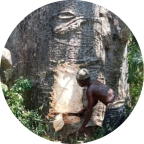
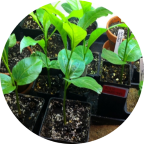
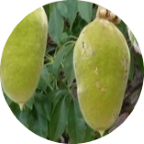
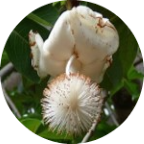


The baobab is a long-lived, deciduous, succulent tree in the Malvaceae family, subfamily Bombacoideae, with eight recognized species.
In Africa's savanna, the baobab genus (Adansonia) is represented by a single species called
Adansonia digitata , colloquially known as the Tree of Life
following the
Hollywood blockbuster the Lion King
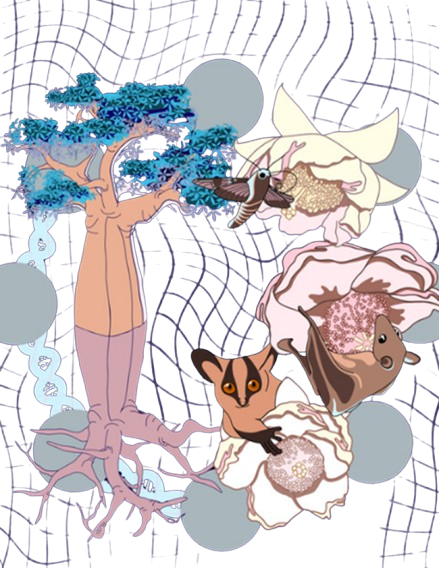
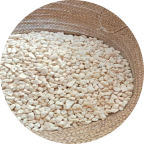
Baobabs have significant ecological, cultural, and economic value. Their leaves and fruits, rich in vitamin C, are considered a superfood. The seeds produce oil used in cosmetics, and the bark is used for making ropes and mats. Medicinally, the bark contains alkaloids used to treat malaria.
This database provides haploid chromosome-level reference genome of Adansonia digitata and draft assemblies for a sibling tree, two trees from distinct locations in Africa, and related species from Madagascar. Our paper highlights unique DNA transposons and the UVR8 pathway associated with baobab longevity. It also provides a detailed view of the genome’s structural organization, including centromeres, telomeres, ribosomal DNA, and DNA methylation patterns.